Sauerkraut is just cabbage and salt, left to ferment until it turns tangy and sour. A jar goes a long way, and it’s useful well beyond a topping for sandwiches. It can be the base of a stew, the filling for dumplings, a quick pasta sauce, or even the secret to a moist chocolate cake.
This roundup starts with six ways to make your own, from a classic two-ingredient kraut to spicy, green and fruity versions. After that come 15 recipes that cook with it, including Central and Eastern European dishes like jota, bigos, pierogi and sarmale, plus a few that might surprise you.

Types of Sauerkraut You Can Buy
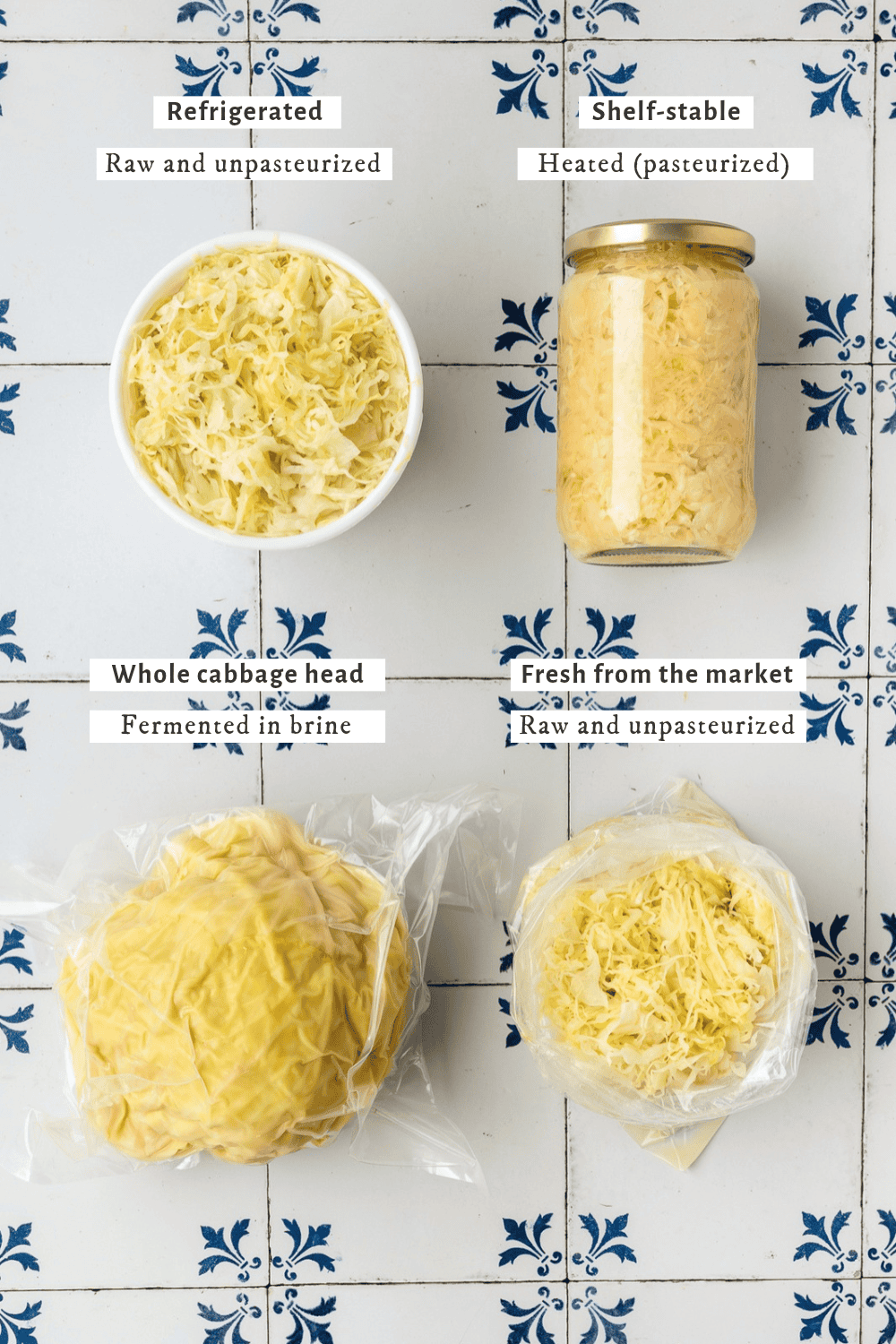
You’ll usually find sauerkraut sold four ways, and they aren’t interchangeable in every recipe.
Fresh, from the market. In much of Central and Eastern Europe, sauerkraut is sold loose by weight, scooped straight from the barrel. It’s raw and unpasteurized, so keep it in the fridge. Flavor and saltiness vary from one maker to the next, so taste it before you cook with it.
Refrigerated, in jars or bags. You’ll find these in the chilled section, near the pickles and kimchi. Most are raw and unpasteurized, which means they still contain live cultures, and they tend to be crunchier and cost more. Not everything in the fridge is raw, though, so check the label. This is the kind to use when you’re eating sauerkraut uncooked, in salads, bowls, and sandwiches.
Shelf-stable, in jars or cans. These have been heated (pasteurized) after fermenting, so they keep at room temperature until opened but no longer contain live probiotics. They’re softer and cheaper, and they’re ideal for cooking, since heat would kill the live cultures in raw sauerkraut anyway. Some brands add vinegar, sugar, or preservatives, so check the ingredients if you want just cabbage and salt.
Whole fermented cabbage heads. Instead of being shredded, the whole head is fermented in brine, so the leaves stay intact and soft enough to roll. These are what you need for sarma and other stuffed cabbage rolls, like the sarmale in this roundup. Look for them at markets and Balkan or Eastern European grocers, mostly in the colder months, sold loose or vacuum-packed. Cut out the core, rinse the leaves if they’re very salty, and use any torn leaves to line the bottom of the pot under the rolls. You can also slice it up and use it as you would the shredded kind that you buy at the markets.
22+ Vegan Recipes Using Sauerkraut
Six ways to make your own sauerkraut and 14 vegan recipes that put a jar to good use, and two using a head of fermented cabbage. Think hearty stews, pierogi, cabbage rolls, Reubens and fritters, plus a chocolate cake with a secret ingredient.
Make Your Own Sauerkraut

Homemade Plain Sauerkraut
A good place to start if you've never made sauerkraut. Tonia keeps it to cabbage and salt, and she weighs the salt at 2% of the cabbage, so it's easy to scale to however much cabbage you have. Her rule is "under the brine everything is fine," and she starts tasting from day three, since kraut ferments faster in summer than in winter. One reader said "This guided me through my first foray into fermenting veg perfectly," and another said they "wouldn't be able to differentiate the texture between mine and store-bought."

How to Make Sauerkraut (4 Flavors!)
Lindsay gives one base method and three ways to flavor it: red cabbage with beet and ginger, green cabbage with apple and caraway, and a spicy radish and jalapeño kraut for tacos. There's also a quick stovetop red cabbage and onion version if you can't wait a week, although she points out it isn't truly fermented. "I really loved all the flavors!" one reader wrote, and another called it the "Best tutorial I've ever seen for this!"

Root Vegetable Sauerkraut with Radish, Beets, and Celeriac
Kaitlynn, a food microbiologist, flips the usual ratio: this is mostly golden beets, carrots, radishes and celeriac, with just a little cabbage to balance the ferment. It uses a bit more salt and ferments for three to four weeks, and she suggests topping it up with raw apple cider vinegar if the brine runs low. "This is so good. Made a double batch the first time, ready to make our second batch," one reader wrote.

Easy Spicy Golden Sauerkraut
Turmeric turns this one bright gold, and red chili flakes and whole black peppercorns give it heat. Kristen leaves the peppercorns in, since they soften and mellow as the kraut ferments, and she likes hers at around two weeks, when it has a slight fizz and the spices have come through.

Super Green Sauerkraut Recipe w/ Garlic, Turmeric & Ginger
A good one for using up a glut of greens: bok choy, napa cabbage, kale or mustard greens, fermented with garlic, ginger and turmeric. Deanna mixes two or three greens, including at least one with crunchy stems, so the kraut doesn't turn mushy. One reader called it "Cravable," and another said "it turned out great!"

Red Cabbage, Blueberry and Apple Sauerkraut
Anya grew up with home pickling and fermenting as the norm, and this is her more colorful take: red cabbage with whole blueberries, green apple sticks and a little coriander seed. It still tastes mostly of sauerkraut, with sweet bursts from the blueberries and some crunch from the apple. "What a brilliant idea to add blueberries to sauerkraut!" one reader wrote.
Recipes Using Sauerkraut

Sauerkraut and Bean Stew (Slovenian Jota)
Sauerkraut: Shelf-stable or market, rinsed
Jota is a humble stew from Slovenia's Primorska region, made with sauerkraut, borlotti beans and potatoes. Traditional versions use smoked meat, and this one gets its smokiness from smoked paprika instead. The potatoes are cooked separately and roughly mashed, because the acidity of the sauerkraut would stop them from softening. Readers have called it "deeeeeeeeelicious!" and one said it was "just as delicious and hearty as the one I remember."

Vegan mushroom and cabbage pierogi
Sauerkraut: Shelf-stable or market, finely chopped
Ania fills her pierogi with mushrooms, fresh cabbage, and sauerkraut, cooked down in the soaking water from dried porcini, then tops them with fried onions and her own walnut crumb. Readers say they're "so flavorful and comforting, ideal meal on a cold autumn night," and one noted they "tasted amazing after being frozen for a few weeks."

Vegan Sauerkraut Skillet with Potatoes and Smoked Tofu
Sauerkraut: Refrigerated (raw) or market, stirred in off the heat
Nina came up with this 25-minute skillet when she was too hungry to make the Schupfnudeln she'd planned. Smoked tofu, onion and precooked sliced potatoes are fried until golden, and the sauerkraut is stirred in off the heat so it stays raw. One reader called it "Excellent recipe. One of our favorites! The fresh dill is a must!!" and another said it was "simple and delicious."

Vegan Eggplant Reuben Sandwich (Gluten Free)
Sauerkraut: Refrigerated (raw), well drained
Caitlin's "corned beef" is thinly sliced eggplant, marinated overnight in a spiced vinegar brine with beet for color, then roasted until chewy. It's layered on rye with sauerkraut, vegan Swiss and homemade Russian dressing, and it's oil-free. "This sandwich was amazing! It looks beautiful and tastes so savory," one reader wrote.

Quick and Easy Sauerkraut Pasta
Sauerkraut: Shelf-stable, squeezed
A budget pantry pasta ready in about 30 minutes. The sauerkraut is cooked down with caramelized onion, tomato paste and paprika into a tangy sauce, and it's made with cheap shelf-stable sauerkraut, since the heat would kill the probiotics in raw kraut anyway. Readers call it "simple, easy, relatively quick, absolutely delicious!" and one said "it's tasty even when reheated in the microwave the next day!"

Vegan Bigos (Polish Hunter's Stew)
Sauerkraut: Shelf-stable or market, with its juice
Smoky baked tofu replaces the meat in this Polish hunter's stew, and prunes balance the sourness of the sauerkraut. Alissa adds the sauerkraut near the end so the potatoes have time to soften first. Readers describe "a great savory and tangy depth of flavor," and one loved "the flavour of the carraway seeds."

Sauerkraut Stuffed Pasta Rolls
Sauerkraut: Shelf-stable or market, drained (save the juice)
Krautkrapfen are a specialty of the Swabian and Allgäu regions in Germany. Julia describes them as a savory cinnamon bun, with smoked tofu and apple in the sauerkraut filling. The rolls are pan-fried on one side, then simmered in broth and the leftover sauerkraut juice until the liquid has cooked away.

Sauerkraut Fritters
Sauerkraut: Shelf-stable or market, squeezed (save the juice)
These are loosely inspired by Korean kimchi pancakes, with sauerkraut in place of kimchi and chickpea flour in place of wheat, so they're gluten free. Malin uses the sauerkraut juice in the batter and seasons it with persillade, a parsley and garlic spice mix popular in Sweden. Serve them with vegan mayo and a green salad.

Whipped tofu, mushroom and sauerkraut flatbreads
Sauerkraut: Refrigerated (raw)
A quick lunch that takes about 20 minutes. Firm tofu is blended with lemon and olive oil until light and creamy, then spread on warm flatbreads and topped with sauerkraut straight from the jar and pan-fried mushrooms with paprika and chives. The sauerkraut isn't cooked, so it's a good place to use raw kraut.

Sarmale (Stuffed Cabbage Rolls - Vegan)
Sauerkraut: A whole fermented cabbage head
These are rolled in whole sauerkraut leaves rather than blanched fresh cabbage and filled with mushrooms, rice, soy mince and plenty of garlic. They simmer in a paprika and summer savory gravy. Nico says they keep for around 10 days in the fridge and get better the longer they sit. One reader said they look "SO good and SO comforting."

Vegan Sauerkraut Potato Casserole
Sauerkraut: Canned or shelf-stable (drain it if it's very wet)
Ameera and Robin bake potatoes, mushrooms and sauerkraut in a creamy cashew sauce. It's blended with an apple, which melts in and adds a little sweetness, and seasoned with ume plum vinegar and caraway. It's oil-free and gluten-free, and they warn that the sauerkraut flavor is front and center. "I've made this twice and it's delicious! Thanks for a great, unusual recipe," one reader wrote.

Vegan Tempeh Reuben Sandwich
Sauerkraut: Refrigerated (raw) - ideally red (purple) cabbage
Marinated tempeh stands in for corned beef in this Reuben, layered on rye with sauerkraut, gherkins, melty vegan cheese and a sriracha mayo. Everything is made in one frying pan in about 20 minutes, which also crisps the bread. Serve it with a side salad.

Vegan Szegedin Goulash with Yeast Dumplings (Hungarian Stew)
Sauerkraut: Shelf-stable (jarred)
Despite the name, this Hungarian goulash isn't named after the city of Szeged but after the writer József Székely. Isa makes it with seitan, smoked tofu and seasoned sauerkraut, finished with vegan sour cream. It comes with fluffy Bohemian yeast dumplings, which she shapes in a way that keeps them from splitting as they cook.

Easy Sauerkraut Salad with Mango and Almonds
Sauerkraut: Refrigerated (raw) or homemade, ideally red (purple) cabbage
A Russian-style sauerkraut salad usually has carrot, apple and cranberries. Elena swaps in mango and ground almonds with a lemon, cardamom and ginger vinaigrette, and it's ready in five minutes. One reader called it "AWESOME. I mean, so, so good," and another said "I would never have thought of combining these flavours."

Vegan Cabbage Rolls with Walnuts
Sauerkraut: A whole fermented cabbage head, or a jar of sauerkraut leaves
A meatless sarma traditionally served on fasting days in Serbia, usually in the run-up to Christmas. Nevena fills sour cabbage leaves with rice, grated potato, carrot, celery and ground walnuts, which add a mild, nutty flavor, and seasons them with paprika and Vegeta. With no meat in the filling, she adds a generous splash of oil to keep it rich.

Magical moist chocolate cake with a secret ingredient
Sauerkraut: Shelf-stable, rinsed and finely chopped
The secret is finely chopped, well-rinsed sauerkraut, which keeps the cake moist without tasting of sauerkraut. It's sweetened with coconut sugar, topped with dark chocolate and cacao nibs, and Lara says it tastes best after two days. One reader said "wow, it is amazing. The texture is great, taste is awesome."
FAQ about sauerkraut and cooking with it
Is sauerkraut vegan? Yes. Traditional sauerkraut is made from cabbage and salt, sometimes with spices like caraway or juniper. If you’re buying it, check the label for any added ingredients.
What’s the difference between raw and pasteurized sauerkraut? Raw sauerkraut is sold chilled and still contains live cultures. Pasteurized sauerkraut has been heated so it keeps at room temperature until opened, but the heat kills the live bacteria. Use raw sauerkraut when you’re eating it uncooked, and shelf-stable sauerkraut for cooking.
Does cooking sauerkraut kill the probiotics? Yes, heat kills the live cultures, although the dish keeps the fiber and the flavor. If you want the probiotics, stir raw sauerkraut in after cooking or serve it on the side.
Should I rinse sauerkraut before cooking with it? It depends on how sour and salty yours is. Taste it first. If it’s very strong, give it a quick rinse and squeeze it dry. For cakes, fritters or fillings, squeeze out as much liquid as you can so the dough or batter doesn’t get soggy.
Why are potatoes cooked separately in some sauerkraut stews? The acidity in sauerkraut can stop potatoes from softening. That’s why recipes like jota cook the potatoes separately, and why bigos adds the sauerkraut only once the potatoes are tender.
What can I do with leftover sauerkraut juice? Don’t pour it out. Use it in fritter batter, to simmer stuffed pasta rolls, as a tangy splash in soups and stews, or as a starter for your next batch of homemade sauerkraut.
How long does sauerkraut keep once opened? Keep it in the fridge, pressed under its brine in a clean jar, and always use a clean spoon. Raw sauerkraut will keep for months like this. Opened shelf-stable sauerkraut won’t last as long, so check the label.
What equipment should I use, and which metals should I avoid? Ferment in glass or glazed ceramic, like a mason jar or a fermenting crock. Avoid aluminum, copper, brass, cast iron, and tin for bowls, utensils, or containers. The salt and acid in sauerkraut react with them, which can give it an off flavor or color and let metal leach into the kraut. Stainless steel is fine for mixing bowls, funnels, and fermentation springs. Regular metal jar lids can rust from the brine, though, so use a fermentation lid or put a layer of parchment paper under the lid.
How do I know when homemade sauerkraut is ready? Start tasting it after about a week. Most recipes ferment for one to two weeks, longer for a more sour kraut, then move it to the fridge. Bubbles, cloudy brine, and a little white foam on top are normal. Pink, green, or fuzzy mold means it’s time to throw it out and start again.
Print
21+ Vegan Recipes using Sauerkraut (Plus How to Make Your Own)
- Prep Time: 10 minutes
- Total Time: 10 minutes
- Yield: 4 as a side
Description
21+ vegan recipes using sauerkraut, from jota, bigos and pierogi to Reubens and even chocolate cake. Plus six ways to make your own and which kind to buy!
Ingredients
Simple Sauerkraut Salad with Garlic and Black Pepper
Equipment
- Sieve
- Fine grater
- Measuring spoons
- Serving bowl
- Fork
Ingredients
- 1 lb / 500g sauerkraut (refrigerated or from the market), drained
- 3 garlic cloves
- 3 tablespoons / 45ml extra virgin olive oil (or cold-pressed sunflower oil), plus extra to serve
- ¾ teaspoon freshly ground black pepper, plus extra to taste
- ½ teaspoon sweet paprika, optional
Instructions
- Drain the sauerkraut: Tip the sauerkraut (1 lb / 500g) into a sieve and press gently to remove most of the brine. Taste it, and if it’s very sour or salty, rinse it briefly under cold water and squeeze it dry.
- Chop the garlic: Finely chop the garlic (3 cloves).
- Mix: Add the sauerkraut to a serving bowl and loosen it with a fork. Add the garlic, olive oil (3 tablespoons / 45ml), black pepper (¾ teaspoon), and paprika (½ teaspoon), if using, and mix well.
- Rest and serve: Leave the salad for 15 minutes so the garlic mellows into the sauerkraut, then finish with a drizzle of oil and more black pepper to serve.
Notes
Sauerkraut: Use raw sauerkraut from the fridge or the market, since this salad isn’t cooked. Shelf-stable sauerkraut works, but it’s softer and won’t have live cultures.
Salt: You shouldn’t need to add any. Sauerkraut is already salty, so taste before you add more.
Storage: Keeps in an airtight container in the fridge and consume within 4 days.